
A crown falls off while you’re eating, or part of a filling suddenly breaks away. You check the tooth, realize it barely hurts, and face the obvious question: Do I need a dentist today, or can this wait?
Pain is important, but it is not the only factor that determines how quickly a damaged restoration should be evaluated. Swelling, worsening sensitivity, exposed tooth structure, bleeding, and the extent of the damage can all affect how urgently you need care. And because some problems are difficult to assess at home, a painless tooth should not automatically be considered a harmless one.
If you’re unsure what to do, Parthenon Dental provides emergency dental care in San Ramon for dental problems that need prompt attention. Below, we’ll walk through the signs that can help you determine when to call right away, what you can do while waiting, and when a broken crown or filling may be able to wait for a scheduled appointment.
What Determines How Urgent a Broken Crown or Filling Is?

Not every broken crown or filling requires an emergency dental visit, but pain is not the only sign that matters. What you feel—and what you can see around the damaged tooth—can help you decide how quickly to contact your dentist.
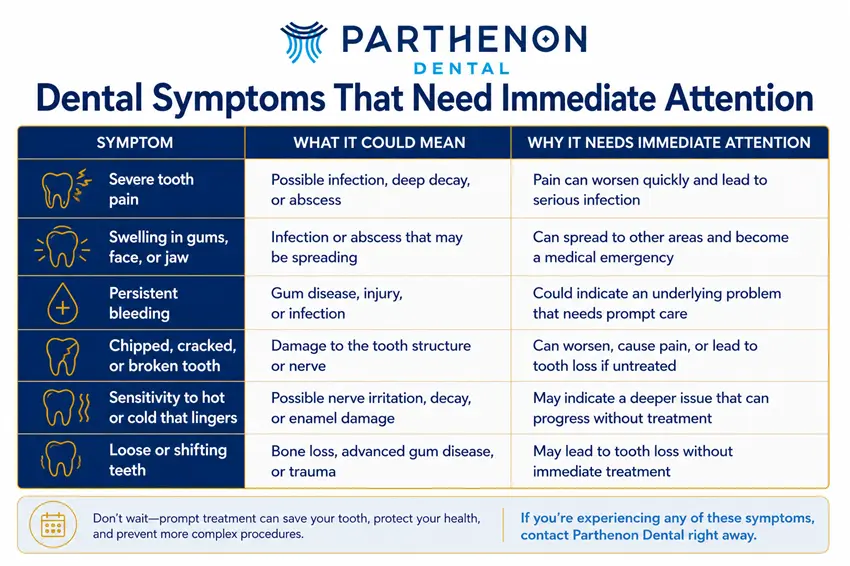
Call your dentist promptly if you notice:
- Increasing or significant pain, especially pain that is throbbing or makes it difficult to eat or sleep
- New sensitivity to hot, cold, sweets, or pressure after the crown or filling breaks
- Exposed or damaged tooth structure where the restoration used to be
- A sharp or broken edge that repeatedly cuts or irritates your tongue, cheek, or lip
- Swelling around the tooth, gums, jaw, or face
Swelling deserves particular attention because it can be associated with infection. If swelling is significant or spreading, or occurs with fever, difficulty swallowing, or difficulty breathing, seek urgent medical or dental care rather than waiting for a routine appointment.
Even without these symptoms, contact your dentist when a crown or filling breaks. The extent of the damage is not always obvious from what you can see or how much the tooth hurts.
What Should You Do If a Dental Crown Breaks or Comes Off?
If a crown comes off, save it if you can and contact your dentist. An intact crown can sometimes be recemented, but that depends on the condition of both the crown and the tooth underneath it. If the crown is damaged or the underlying tooth has changed, a replacement may be necessary.
Don’t use a lack of pain as your only reason to delay that call. This is especially important for a tooth that has previously undergone root canal treatment. Because the nerve tissue inside the tooth has been removed, problems involving the tooth or restoration may not produce the sensitivity you would otherwise expect.
Until you can be seen, avoid chewing on the affected tooth and keep the area as clean as possible. Your dentist can examine the remaining tooth structure, determine why the crown came off, and decide whether the existing restoration can be reused.
When replacement is necessary, Parthenon Dental offers same-day dental crowns, which can allow eligible patients to have a new crown designed, created, and placed without waiting for a separate delivery appointment.
What Should You Do If a Filling Breaks or Falls Out?
When part or all of a filling comes out, the tooth may become sensitive because previously covered tooth structure is now exposed. You may notice discomfort with cold drinks, sweets, chewing, or even air moving across the tooth. In other cases, a lost filling causes very little discomfort at first.
Contact your dentist promptly, especially if you notice:
- Pain or sensitivity that is significant or getting worse
- Pain when biting or chewing on the affected tooth
- A sharp edge that is irritating your tongue or cheek
- A visible crack or broken portion of the tooth along with the missing filling
- Swelling around the tooth or nearby gums
Even a painless lost filling should be evaluated. The dentist needs to determine how much tooth structure remains, whether additional decay or damage is present, and what type of restoration is appropriate.
Sometimes another dental filling is all that is needed. If a larger portion of the tooth has been damaged or weakened, your dentist may recommend a different type of restoration instead.
What Not to Do While Waiting for an Appointment
While you wait to be seen, try to protect the affected tooth rather than attempting a permanent repair yourself. Avoid chewing on that side of your mouth, especially on hard or sticky foods, and be cautious with very hot, cold, or sweet foods if the tooth has become sensitive.
Continue brushing the area gently so food and plaque do not accumulate around the damaged tooth. If you still have a crown that came off, keep it in a clean, safe place and bring it with you to your appointment.
Temporary dental repair products are available over the counter, but they are not a substitute for having the tooth examined and properly restored. If you are considering one, contact your dental office for guidance on whether it is appropriate for your situation.
Never use super glue or another household adhesive to reattach a crown. These products are not intended for dental use and may make proper treatment more difficult.
Most importantly, don’t repeatedly test the damaged tooth by biting down on it to see whether it still hurts. Protect the area and let your dentist determine what happened and what the tooth needs next.
When Does a Broken Crown or Filling Become a Dental Emergency?
A broken crown or filling usually needs a dentist rather than a hospital emergency room, but some symptoms require more immediate attention. Significant facial swelling, fever, uncontrolled bleeding, difficulty swallowing or breathing, or symptoms that are rapidly getting worse should not be ignored.
For problems limited to the tooth—such as a lost restoration, new sensitivity, pain when biting, or a sharp broken edge—call your dentist and explain what happened and what symptoms you are experiencing. The dental team can help determine how quickly you should be evaluated.
Hospital emergency departments generally cannot provide definitive treatment such as replacing a filling or repairing a crown. However, symptoms involving breathing or swallowing, severe facial swelling, significant trauma, or another potentially serious medical complication may require emergency medical care.
Not sure where your situation falls? Our guide to when a dental problem can’t wait covers additional warning signs and situations that may require urgent attention.
Don’t Let a Painless Broken Crown or Filling Fool You
A broken crown or filling does not have to hurt to need attention. The restoration was protecting part of your tooth, and once it breaks or comes loose, your dentist needs to determine what happened underneath it and how the tooth should be restored.
If you have significant pain, swelling, increasing sensitivity, or additional damage to the tooth, contact Parthenon Dental promptly. If the tooth feels fine, it is still worth calling rather than deciding on your own to wait several weeks.
Tell us what happened and what you’re feeling. The Parthenon Dental team can help determine whether you should come in promptly or whether your appointment can safely be scheduled for another time.