Gum disease tends to develop quietly, with little pain in the early stages, which makes it easy to miss. By the time gums are visibly receding or teeth start to feel loose, the infection has usually been active for a while. At Parthenon Dental, we offer periodontal treatment in San Ramon that meets patients wherever they are, whether that is a straightforward gingivitis cleanup or a more involved plan for long-standing bone loss. If your gums have been bothering you, schedule an appointment and let us take a clear look at what is going on.
What Is Gum Disease and Why Does It Progress?
Gum disease, also called periodontal disease, starts with bacteria. Plaque builds up along and beneath the gumline. When teeth are not cleaned through good oral hygiene, the plaque hardens into tartar that a toothbrush cannot remove. The bacteria in that buildup trigger inflammation in the surrounding gums, and over time, begin breaking down the bone and gums holding the teeth in place. What starts as puffy, bleeding gums can eventually lead to recession, loose teeth, and tooth loss if left unaddressed.
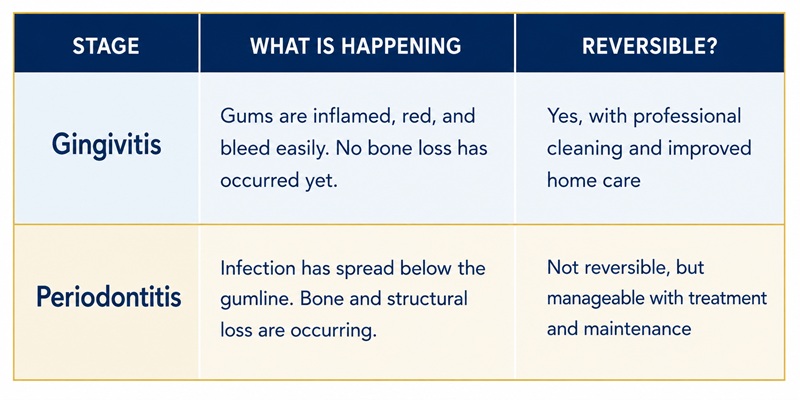
There are two primary stages to gum disease:
According to the CDC, nearly half of adults aged 30 and older in the United States have some form of periodontal disease. This condition is common, treatable, and not something to be embarrassed about. Our dentist and hygienists screen for gum disease at every routine visit, helping you catch it early and keep it from becoming a much bigger problem. Consistent oral care and timely treatment for periodontal disease can stop its progression at any stage.
Signs You May Have Periodontal Disease
The tricky thing about gum disease is that it often does not hurt, at least not at first. Patients come in for a routine visit and leave with a periodontitis diagnosis they genuinely did not see coming. By the time symptoms are obvious, the condition has been progressing for some time. Here is what to watch for:
- Gums that bleed during brushing or flossing, even occasionally
- Red, swollen, or tender gum tissue that looks different from usual
- Persistent bad breath that does not respond to brushing or mouthwash
- Gum recession, where the gumline is visibly lower than it used to be
- Teeth that feel loose, or a bite that feels like it has shifted
- Sensitivity at the root surface or along the gumline
- Visible gaps or pockets opening up between the gums and teeth
Any of these signs is worth mentioning to a dentist, and more than one is a clear signal to come in soon. Gingivitis is still reversible with improved hygiene and a thorough deep cleaning. Once it progresses to periodontitis, the goal shifts to managing and stabilizing rather than undoing. An evaluation is the only way to know which stage you are in and what managing gum disease will actually take.
Treatment and Dental Care for Periodontal Disease
What is the treatment for periodontal disease? The right approach depends entirely on where you are in the progression. Our dentist evaluates pocket depths, bone levels, and gum condition before recommending anything. Periodontal dental care is available at every stage, and the earlier we catch it, the simpler the treatment tends to be. Here is how we approach each level of care.
Gingivitis: professional cleaning and home care
Good news first: if we catch gum disease at the gingivitis stage, we can often turn it around completely. A thorough professional cleaning removes the tartar that daily brushing misses, and consistent oral hygiene at home helps to keep bacteria from returning. At Parthenon Dental, our team goes through home care in real terms because knowing the right technique matters more than just being told to floss more. Good daily hygiene habits combined with routine dental visits are the foundation of lasting gum health, and most patients with gingivitis see meaningful improvement within a few weeks.
Scaling and root planing for deeper infection
Once infection has moved below the gumline, a standard cleaning will not reach it. Scaling and root planing is a non-surgical deep cleaning that removes plaque and tartar from beneath the gumline and smooths the root surfaces so the gums can reattach. We typically divide these procedures across two appointments, working one side of the mouth at a time, so patients are comfortable throughout.
Most patients do fine with local anesthetic, and the procedures are much more comfortable than people expect going in. For anyone who feels significant anxiety about longer appointments, sedation dentistry is an option worth discussing. After the deep cleaning is complete, our dentist checks in at a follow-up visit to confirm pocket depths are reducing and the gums are responding as expected.
Antibiotic therapy
Sometimes, mechanical cleaning is not quite enough on its own. In those cases, we place localized antibiotics directly into the gum pockets after root planing to address bacteria that instruments cannot fully reach. This is especially useful in cases where the infection has been persistent despite good oral hygiene and prior dental treatment. It is a targeted approach, and it works best as part of a broader plan rather than a standalone fix.
Periodontal surgery for advanced cases
In the most severe cases, surgery is required. Periodontal surgery gives our dentist direct access to deeper areas of the bone and root surface by temporarily folding back the gum layer. In cases where significant bone has been lost, grafting can help rebuild some of the structural support. We walk through every step of the treatment plan with patients before anything is scheduled, so there are no surprises and plenty of time for questions.
If a tooth cannot be saved, extraction is sometimes the best option. It allows room for a healthier outcome. Once the infection is resolved and the bone has stabilized, dental implants can be used to restore the space.

Gum Disease and Your Overall Health
Gum disease is a mouth problem, but the bacteria can move through the rest of your body. Research has linked periodontal disease to heart disease, diabetes, and pregnancy complications because chronic oral infection introduces bacteria into the bloodstream that can contribute to issues throughout the body. Oral health is just as important as other facets of traditional healthcare, and taking care of your dental needs can better serve your overall health.
Consistent dental care goes a long way. Keeping up with regular cleanings, staying on top of oral hygiene at home, and addressing gum disease and other dental issues early are practical steps anyone can take, regardless of existing health conditions.
Periodontal Maintenance After Treatment
After finishing the initial periodontal treatment, the goal is to keep bacteria in check, watch for any new signs of progression, and protect what is there.
For most patients, that means coming in every three to four months rather than the standard six. Each maintenance appointment covers:
- Pocket depth measurements to catch any changes early
- Removal of new tartar, including everything below the gumline
- A close look at gum condition and any spots that need attention
- A check on home hygiene technique with specific adjustments if needed
- X-rays at appropriate intervals to keep an eye on bone levels
Patients who stay consistent with their dental maintenance schedule do significantly better over time. We understand that life gets in the way, and our team works with patients to make this as easy to maintain as possible as part of their broader dental care.
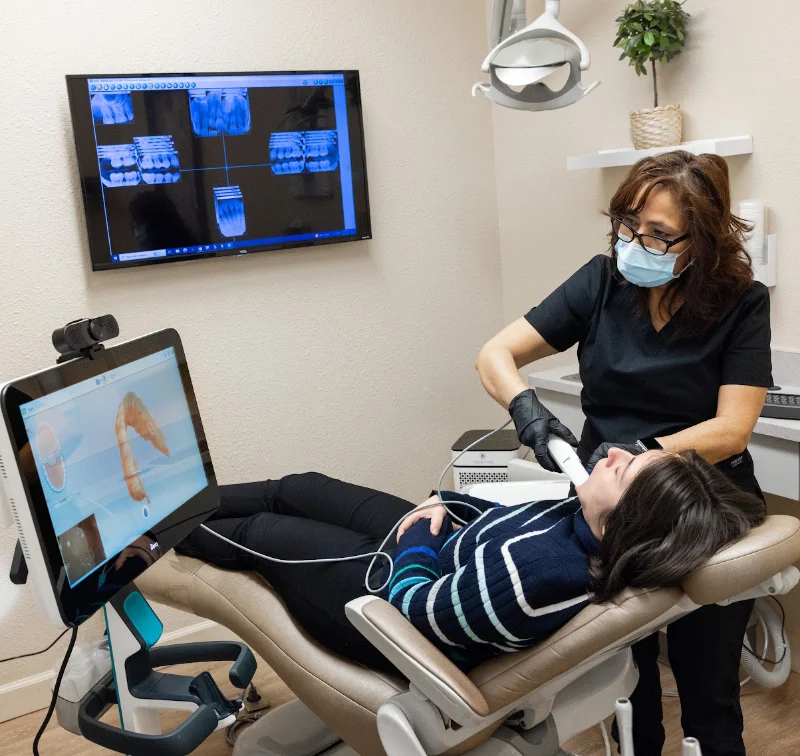
Gum Disease Emergencies: When to Come In Immediately
Not every periodontal concern can wait for a scheduled appointment. An abscess in the gum, sudden severe pain, significant swelling, or a tooth that has loosened quickly are situations that could need same-day attention, not a call to see when the next opening is.
Our team provides emergency dental care in San Ramon and can typically triage urgent oral concerns the same day they come in. Call the office, describe what you are experiencing, and we will figure out the fastest path to getting you seen. Our dentist will assess the situation on the spot and determine whether the next step is root planing, antibiotic therapy, or something more immediate.
Serving San Ramon and the East Bay
Parthenon Dental is located at 2355 San Ramon Valley Boulevard, Suite 103, near City Center Bishop Ranch. We see patients from across San Ramon, including Gale Ranch, Windemere, Dougherty Valley, and Crow Canyon.
Our office is open Monday through Friday. We accept most PPO dental plans and offer flexible financing options for patients whose treatment involves multiple appointments.
Start Your Gum Disease Treatment in San Ramon
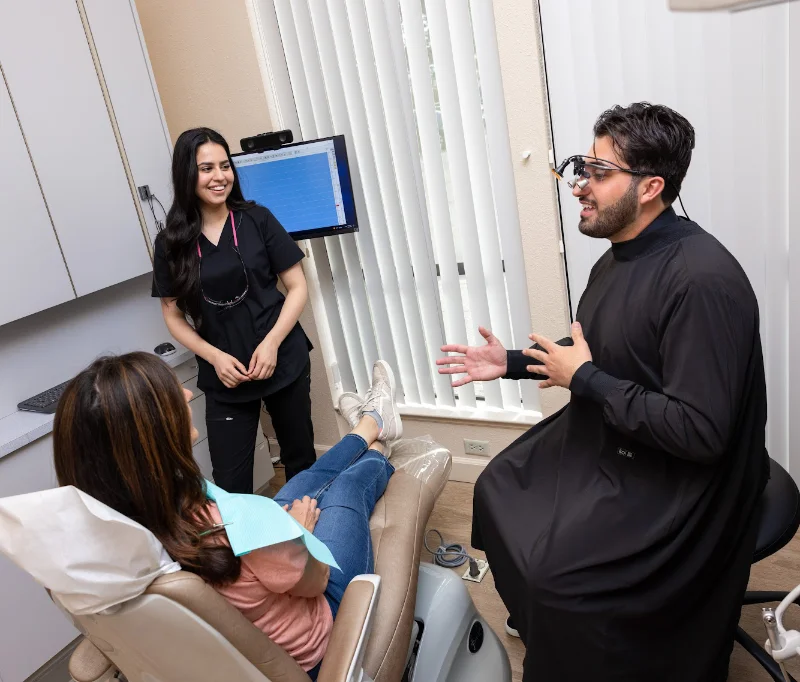
Gum disease is not the kind of thing that resolves if you give it enough time. Treatment gets more involved the longer the disease goes unaddressed. Whether you caught something early, are re-establishing care after a gap, or have been putting off an appointment you know you need, there is no bad time to start.
Good oral hygiene and consistent dental visits matter, and our approach to dentistry is built around helping people actually maintain both. We keep the process clear, the options honest, and the care matched to what your situation actually calls for. Contact Parthenon Dental to schedule your gum disease treatment appointment. We will walk through your options and build a plan that makes sense for your needs.

 925-718-8483