
The concern makes sense. There is a lot of conflicting information online about whitening and enamel, and it is not always easy to tell which claims are grounded in science and which are not. The honest answer is that professionally supervised whitening does not damage healthy enamel. Still, that answer comes with some important context about what whitening actually does, where the real risks exist, and why not all whitening products carry the same profile.
This post covers what bleaching agents do to your teeth, why temporary discomfort happens and what it actually means, where over-the-counter products can cause problems, and how professional whitening services differ from store-bought options.
What Whitening Actually Does to Your Teeth
Whitening works by using peroxide-based agents, typically hydrogen peroxide or carbamide peroxide, to penetrate the outer layers of the tooth and break apart stain molecules. The enamel itself is not dissolved or removed. The peroxide passes through the outer surface to reach the dentin underneath, where most discoloration lives.
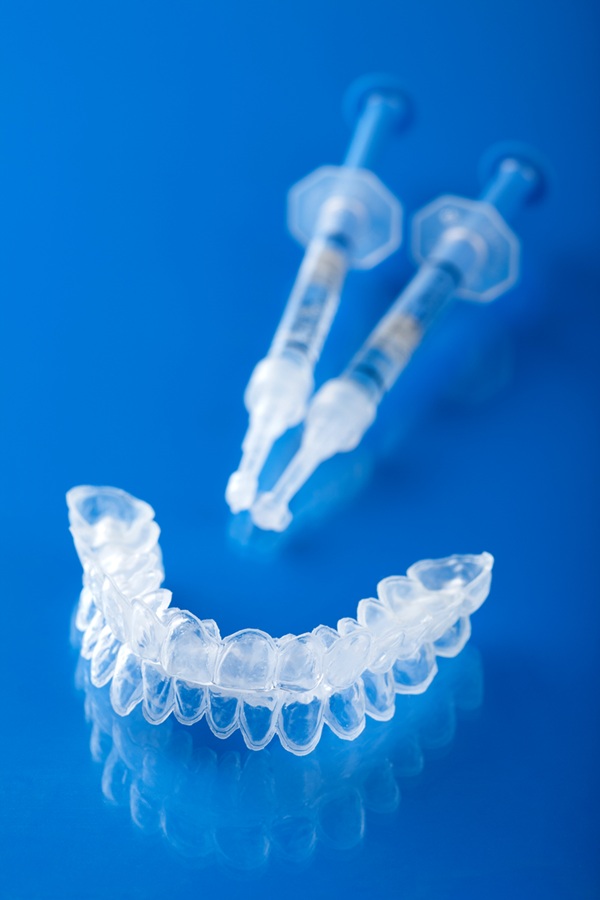
That process temporarily opens the pores of the enamel surface, which is why some people notice sensitivity during or after treatment. Those pores close again once treatment ends and saliva remineralizes the surface. That is a normal, expected part of how whitening works, not a sign of harm.
What actual enamel damage looks like
True enamel erosion is a different matter. It comes from prolonged acid exposure from diet, acid reflux, or certain medications, and presents as thinning, translucency at the tooth edges, and persistent tenderness that does not resolve. That is not what happens with properly administered bleaching. Confusing temporary whitening sensitivity with structural damage is one of the most common concerns patients have, but the two are not the same thing.
Why Discomfort Happens and What It Means
Some tooth tenderness during or after whitening is common, but it does not mean the enamel is being harmed. It means the bleaching gel has temporarily increased permeability, allowing temperature changes and other stimuli to reach the nerve more easily than usual.
For most people, this resolves within 24 to 48 hours. It tends to be brief and sharp in response to cold rather than a persistent ache. A review published in the Journal of Dentistry found that sensitivity following peroxide bleaching is transient and does not indicate structural damage in otherwise healthy teeth. Research also shows that whitening agents can affect already-compromised surfaces more readily, which is why pre-treatment screening matters.
Who tends to notice more discomfort?

Some people are more prone to sensitivity than others. Those with reactive teeth, thinner enamel, exposed root surfaces, or existing dental work near the gum line tend to notice more during treatment. A pre-whitening exam identifies those factors before they become a problem mid-treatment. If discomfort concerns have been keeping you from whitening, it is worth speaking with your dentist before ruling it out. Options include lower-concentration formulas, desensitizing applications before treatment, and adjusted schedules.
Where Whitening Products Can Cause Problems
The concern about damage has more basis when it comes to certain over-the-counter products used incorrectly. Problems tend to come from overuse, excessive application time, or use on teeth with existing issues that were never identified. Here is where the difference between supervised and unsupervised whitening becomes meaningful.
Dentist-supervised whitening
- Peroxide concentration calibrated to your specific needs, not a one-size formula
- Application time controlled and monitored, not estimated at home
- Pre-treatment screening to identify decay or gum disease before they become a problem mid-treatment
- Gum protection using barriers that prevent gel contact with soft tissue
- Frequency guidance so treatment is not repeated more often than is appropriate
Over-the-counter whitening
- One-size formula with no individual concentration adjustment
- Often left on longer than directed, particularly with strips that are easy to forget
- No pre-treatment screening — existing issues like active decay or early gum disease may go undetected
- Ill-fitting trays that allow gel to contact the gums, causing irritation
- No personalized guidance on frequency, making overuse easy
Products most associated with surface concerns include highly acidic whitening rinses, abrasive toothpastes used daily, and charcoal-based products with dramatic claims. Some of these can increase enamel roughness and contribute to plaque retention over time. According to the American Dental Association, products bearing the ADA Seal of Acceptance have been evaluated for safety and effectiveness. Some popular over-the-counter options do not carry that seal, so evaluate what you are using or considering using at home.
In-Office vs. Take-Home: Which Is Right for You
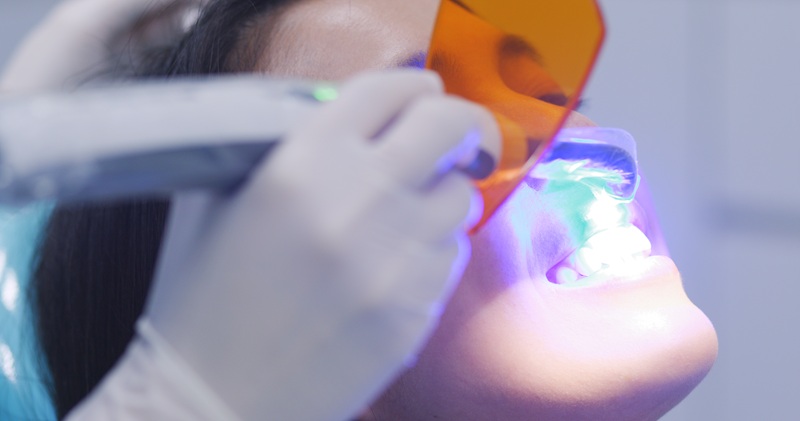
Both in-office and dentist-dispensed take-home whitening are safe when properly supervised. The difference is in speed and concentration. In-office treatment uses higher-concentration gel under controlled conditions and typically produces noticeable results in one visit. Take-home trays use a lower concentration over several days or weeks, which some people find more manageable if they are prone to sensitivity.
Either way, the process starts with an exam. That exam determines whether your teeth and gums are ready, identifies any existing concerns, and informs you which approach will deliver results without placing unnecessary stress on the tooth structure. Store-bought kits skip all of that. For many people with healthy teeth and no complicating factors, they work reasonably well. For anyone with compromised enamel, gum recession, or untreated decay, they can make things worse.
Habits That Protect Your Teeth During and After Whitening
A few practices support good outcomes, whether you whiten with a dentist or at home:
- Avoid highly acidic foods and drinks for 24 to 48 hours after whitening, when the enamel surface is temporarily more permeable
- Use a soft-bristled toothbrush and non-abrasive toothpaste to reduce mechanical wear
- Ask about fluoride or potassium nitrate applications before or after whitening to minimize sensitivity
- Do not exceed recommended treatment frequency; overuse does not improve results and increases discomfort
- Get a dental exam before starting any whitening routine, particularly to rule out active decay or gum disease that should be addressed first
Questions People Ask Most Often
“I read that whitening destroys your enamel — is that true?” The honest answer is that it depends on what products are used, how often, and whether there was any pre-treatment assessment. Supervised whitening with appropriate guidance does not carry that risk for most people.
“My teeth got really sensitive after using whitening strips. Does that mean there was damage?” In most cases, no. It means the strips temporarily increased permeability, and the sensitivity resolved within a day or two. Recurring or persistent tenderness after over-the-counter whitening is worth mentioning to your dentist, though. It can sometimes point to an underlying issue that has nothing to do with the whitening itself.
If you want a clear, personalized answer about whether whitening is right for your teeth, a consultation with your dentist is the most useful next step. A professional evaluation can help you understand how your teeth may react to treatment, and which option makes the most sense for your smile.