Dental problems rarely come with clear instructions. Pain shows up, swelling appears, or something suddenly feels wrong, and the question becomes immediate: Do I need an emergency dentist, or can this wait? Many people hesitate in this moment, unsure whether they are dealing with something urgent or simply uncomfortable.
That hesitation is understandable. Some dental problems need prompt attention to prevent infection, worsening pain, or lasting damage. Others can be addressed safely during a scheduled visit. The difficulty is knowing which situation you are in, especially when discomfort is already distracting or stressful.
Recognizing the signs that point to a true dental emergency helps remove doubt from the decision. It makes it easier to act when time matters and to wait when it does not, without feeling like you are guessing or overreacting.
Signs a Dental Problem Needs Immediate Attention
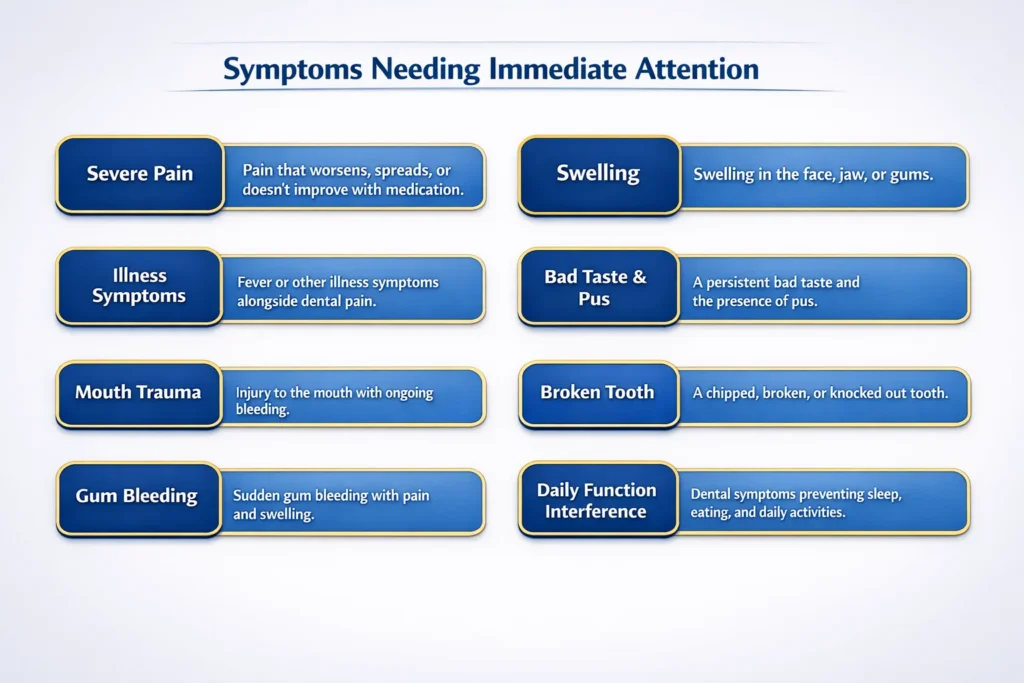
Some dental problems should not be waited out. If any of the following symptoms are present, getting prompt dental care matters.
Severe or worsening tooth pain is one of the clearest signals. Pain that escalates, spreads, or does not respond to over-the-counter medication often points to infection, nerve involvement, or structural damage that will not resolve on its own.
Swelling in the face, jaw, or gums is another red flag. Swelling can indicate infection, and infections in the mouth can progress quickly. When swelling is present, especially if it affects the face or causes pressure, it should be addressed as soon as possible.
Signs of infection require immediate attention. This includes pus, a bad taste that does not go away, fever, or general feelings of illness paired with dental pain. These symptoms mean bacteria have moved beyond the tooth itself.
Dental injuries also fall into this category. A knocked-out tooth, a cracked or broken tooth, or trauma to the mouth should be evaluated right away. Acting quickly can reduce pain, prevent complications, and in some cases save the tooth.
Bleeding that does not stop is another reason to act. Ongoing bleeding after dental trauma or sudden gum bleeding paired with pain or swelling should not be ignored.
If a dental problem is interfering with eating, sleeping, or daily function, it is no longer something to wait on. At that point, the issue is not just uncomfortable—it is urgent.
Dental Problems That Often Feel Serious but Can Usually Wait
Not every dental issue that feels uncomfortable or concerning requires immediate care. Some problems create irritation or worry without posing an immediate risk to your health or teeth.
Examples include mild tooth sensitivity to hot or cold, a dull ache that comes and goes, a small chip that does not cause pain, or a lost filling when there is no discomfort or swelling. These issues still deserve attention, but they can usually be addressed during a scheduled dental visit rather than treated as an emergency.
What matters most in these situations is stability. If symptoms remain mild, do not worsen, and are not affecting daily activities, waiting for a regular appointment is typically reasonable.
Why Waiting Can Make Certain Dental Problems Worse
Some dental problems stay relatively stable. Others progress quickly once they cross a certain threshold. Understanding that difference helps explain why timing matters.
Infections do not resolve without treatment and tend to spread once they take hold. Cracks in teeth often widen under normal chewing pressure. Pain that reaches the nerve rarely improves on its own. As problems progress, treatment becomes more involved, discomfort increases, and recovery takes longer.
Waiting does not always cause harm, but when a problem is actively changing or escalating, delay increases risk rather than reducing it.
What to Do When You’re Not Sure Whether It Can Wait
Uncertainty is one of the hardest parts of dental pain. When symptoms fall somewhere between mild and severe, it is easy to second-guess yourself.
A helpful way to assess the situation is to focus on change and impact. Is the pain worsening? Is swelling appearing or spreading? Is the issue interfering with eating, sleeping, or concentrating? If the answer is yes, waiting is rarely the better option.
When symptoms fall into a gray area, reaching out for guidance is a reasonable step. Calling a dental office to ask questions and explain what you are experiencing helps answer whether action is needed now or whether scheduling care is appropriate.
Getting Guidance When a Dental Problem Feels Urgent
Dental care includes more than treatment. It also includes helping patients understand what is happening and what their next step should be.
When a dental problem feels urgent, getting guidance provides understanding. It helps separate discomfort from true risk and removes the pressure of making the decision alone. That guidance is meant to inform, not rush, and to support timely care when it matters.
Frequently Asked Questions About Dental Emergencies
How do I know if tooth pain is an emergency?
Tooth pain becomes urgent when it is severe, worsening, or accompanied by swelling, fever, or signs of infection. Pain that interferes with daily function should not be ignored.
Is swelling in the mouth always serious?
Swelling is a common sign of infection and should be evaluated promptly, especially if it affects the face, jaw, or causes pressure or discomfort.
What should I do if I crack or break a tooth?
Dental injuries should be evaluated as soon as possible. Even if pain is mild, cracks and breaks can worsen quickly without care.
Can dental infections spread if untreated?
Yes. Dental infections can spread beyond the tooth into surrounding tissue and, in some cases, affect overall health. Early evaluation helps prevent complications.
What if I’m not sure whether my problem can wait?
When in doubt, seeking guidance is appropriate. Describing symptoms helps determine whether waiting is safe or whether prompt care is needed.
When Acting Quickly Can Make a Meaningful Difference
Dental problems do not always announce themselves clearly. Knowing when to act helps protect both comfort and long-term oral health. When symptoms point to infection, injury, or escalating pain, timely care matters. When they do not, reassurance and a plan can be just as important.
At Parthenon Dental, the focus is on helping patients understand their situation and choose the right next step with confidence. If a dental problem feels urgent or uncertain, getting clarity sooner rather than later helps prevent unnecessary stress and complications.