
Most people do not realize they grind their teeth because they catch themselves doing it. They find out after a filling cracks, their jaw has been sore for weeks, or a dentist notices worn enamel during a routine exam. By then, the grinding has often been happening for months or even years. The signs of teeth grinding usually appear long before people connect those symptoms to what happens while they sleep.
Recognizing those early warning signs can help prevent more extensive damage to your teeth, jaw, and bite. Once teeth grinding is identified, a night guard is one of the most effective ways to protect your smile from ongoing wear. The first step, however, is knowing what symptoms to watch for.
What the Teeth Are Quietly Signaling
The jaw generates a significant amount of force, which is why repeated grinding and clenching, known as bruxism, can gradually wear down healthy teeth. During normal chewing, bite pressure averages around 150 to 200 pounds per square inch. During sleep, someone who grinds their teeth can apply force closer to 250 pounds per square inch or more, with no conscious awareness and no natural stopping point. The teeth absorb that load every night. [1]
Changes can be subtle at first. Enamel wears in layers. Teeth flatten slightly over time. Small chips appear at the edges. The changes are gradual enough that many patients assume the tooth just “broke” on its own rather than recognizing a pattern of cumulative stress.
Specific physical signs worth paying attention to include:
- Morning jaw soreness or tightness — The jaw muscles contract during grinding and can feel fatigued when waking up, similar to overworking any other muscle.
- Headaches that start near the temples — The temporalis muscle runs along the side of the skull and is one of the primary muscles involved in chewing and clenching. Tension there often produces a dull, recurring headache that people attribute to stress or sleep.
- Tooth sensitivity to temperature — As enamel thins, the layer beneath it becomes more exposed. Cold drinks or a breath of cool air may produce a sharp reaction that was not there a year ago.
- Teeth that look shorter or flatter than before — This is often easier for a dentist to spot than for the patient. Comparison to older photos or X-rays sometimes makes the wear visible.
- Cracked or broken dental work — Crowns, fillings, and veneers are not designed to withstand the force of chronic clenching. When restorations fail repeatedly without a clear cause, grinding is frequently the underlying reason.
- Neck tension or earaches — The jaw joint sits just in front of the ear canal. Sustained clenching can create radiating tension that travels up into the neck or mimics an ear problem.
None of these symptoms is exclusive to bruxism. When several appear together, especially around waking, the pattern becomes harder to explain by other causes.

The Connection Between Bruxism and TMJ
TMJ disorders and teeth grinding often go hand in hand. The temporomandibular joint (TMJ) is the joint that allows your jaw to open, close, and move from side to side. When you regularly clench or grind your teeth, that joint has to absorb repeated pressure. Over time, that strain can contribute to symptoms like jaw pain, clicking or popping, difficulty opening your mouth comfortably, or discomfort while chewing.
Not everyone who grinds their teeth develops TMJ problems, and not every TMJ disorder is caused by bruxism. However, ongoing grinding is one of the most common factors that can place extra stress on the jaw joint. Identifying and treating teeth grinding early may help reduce that strain before symptoms become more severe.
Dentists can often recognize the signs of bruxism before patients realize anything is wrong. Worn teeth, changes in the bite, or tenderness in the jaw muscles may all point to grinding during sleep. That is one reason regular dental exams are about more than keeping your teeth clean—they can help catch problems before they become more difficult to treat.
Why a Custom Night Guard Works Differently Than Store-Bought Options
Over-the-counter bite guards are widely available, and some people try them before seeking a professional evaluation. The limitation with those products is fit. A night guard that does not fit properly can change the way your jaw rests while you sleep, creating additional muscle tension instead of relieving it.
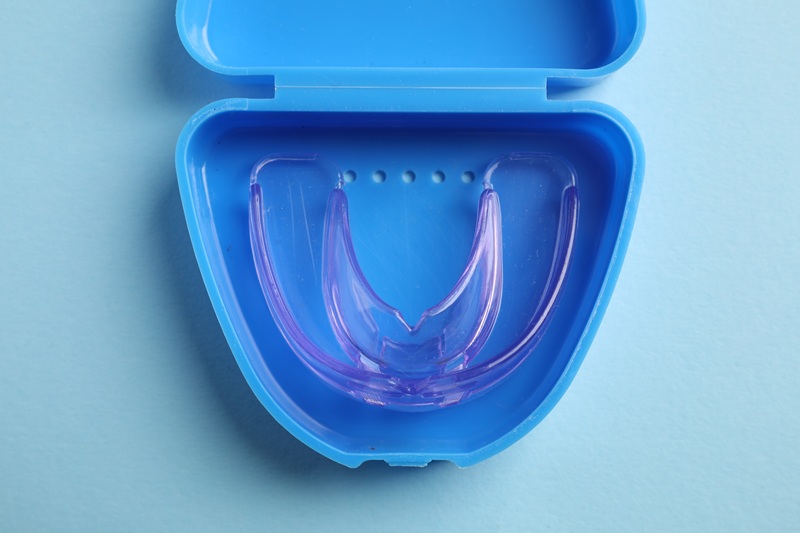
A custom night guard is fabricated from an impression of the patient’s actual teeth. The fit is specific to that bite. The thickness and material can also be calibrated based on the severity of grinding. Someone with light clenching habits needs something different from someone who has already fractured dental work.
Two common custom guard types differ in meaningful ways:
- Hard acrylic guards — Typically worn on the upper teeth. Durable and suited for more significant grinding. They redistribute force across the surface rather than allowing it to concentrate on specific teeth.
- Soft or dual-laminate guards — A softer inner layer for comfort with a harder outer shell for durability. Often preferred for moderate grinding or by patients who find hard guards uncomfortable at first.
The guard does not stop grinding. It creates a protective barrier so the guard wears down instead of the teeth. The underlying muscle habit may still occur, but the damage does not accumulate the same way.

When to Ask About Bruxism Treatment
Bruxism treatment is not one-size-fits-all, and a night guard is not the only solution. Some patients benefit from addressing contributing factors like stress, sleep quality, or bite alignment. In more involved cases, a dentist may refer out for additional evaluation of the jaw joint.
A night guard is often the first step because it helps prevent further damage while your dentist evaluates what else may be needed. If grinding has already worn down your teeth, chipped edges, weakened enamel, or other damage can often be repaired more predictably once the grinding is under control. Fixing worn teeth without addressing the cause usually means the damage is more likely to happen again.
There is no single solution that stops teeth grinding for everyone because the causes can vary from person to person. For many patients, the focus is on protecting the teeth, reducing strain on the jaw, and managing the effects of grinding. A custom night guard does all of those things while fitting comfortably into a person’s daily routine.
Signs Grinding May Already Be Affecting Dental Work
Patients with crowns, bridges, or fillings should pay attention to changes in how those restorations feel. A crown that suddenly feels uneven when you bite down, a chipped filling, or a veneer that breaks without a clear cause are all things to mention at your next dental visit.
Another sign people often overlook is ongoing sensitivity or discomfort around a recently treated tooth. If a crown still feels “off” weeks after it is placed, it is easy to assume the restoration simply needs an adjustment. Sometimes that is the case. Other times, nightly teeth grinding puts extra pressure on the tooth and prevents it from feeling comfortable. Recognizing that possibility helps your dentist decide the best next step.
A custom night guard can also help protect existing dental work. Compared to replacing a damaged crown, repairing a cracked tooth, or needing a dental implant, protecting those dental restorations with a night guard is often the simpler and more affordable option.
How Dentists Identify Teeth Grinding
Dentists can often spot the signs of bruxism before patients realize they have been grinding their teeth. Flattened chewing surfaces, small cracks in the enamel, chipped restorations, and unusual wear patterns all tell part of the story. Jaw muscle tenderness and changes in the way the teeth come together can provide additional clues.
In some cases, a single symptom is enough to raise concern. More often, it is the combination of worn teeth, recurring jaw discomfort, headaches, or damaged dental work that points to nighttime grinding. Looking at those findings together gives dentists a clearer picture of what is happening.
Why Teeth Grinding Is Easy to Miss
One of the challenges with bruxism is that it develops gradually. Unlike a broken tooth or a sudden toothache, the effects build over months or years. Enamel wears away little by little. Dental work experiences repeated stress. Jaw muscles adapt to constant tension until soreness begins to feel normal. Because the changes happen so slowly, many people do not recognize them until a dentist points out the pattern.
That gradual progression is also why protecting the teeth early matters. Preventing additional wear is often simpler than rebuilding tooth structure that has already been lost. Whether someone grinds occasionally or every night, recognizing the habit before it causes more significant damage gives them more options for protecting their long-term oral health.