Tooth loss affects more people than most realize. It can happen from an accident, decay, gum disease, or a tooth that simply could not be saved. Whatever the reason, a missing tooth is not just a cosmetic concern. It affects their appearance, confidence, and oral health in ways that build up over time.
Dental implants have become one of the most trusted long-term solutions in modern dentistry for replacing missing teeth. But many people are unsure whether they are actually a candidate. If you have been wondering whether an implant might be right for you, here are some signs worth paying attention to.
What a Missing Tooth Does to Your Smile Over Time
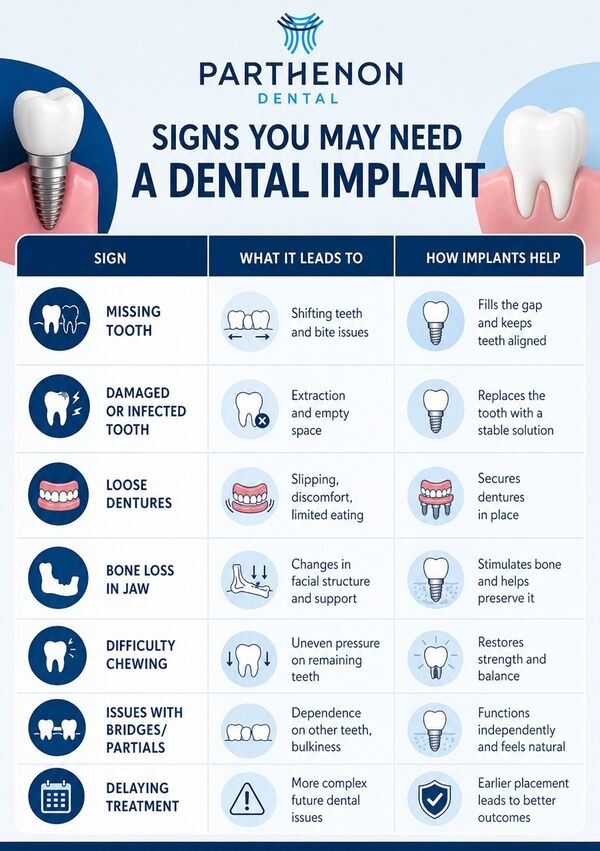
This is one of the clearest signs you need a dental implant evaluation. If you have a gap in your smile, whether it is visible or not, that space needs attention. A missing tooth does more than affect your appearance. The surrounding teeth can begin to shift toward the open space over time. That shifting can lead to bite problems, uneven wear, and other dental issues that compound over the years.
A dental implant fills the space with a stable, permanent root. It supports the surrounding teeth and helps maintain the natural alignment of your bite. Among the available missing tooth replacement options, implants are the only solution that replaces the root itself, not just the crown.
Signs a Cracked or Infected Tooth May Need an Implant
Sometimes a tooth is too damaged to restore. Severe decay, a deep fracture, or infected teeth can reach a point where care is no longer enough to save the tooth. A persistent bad taste in your mouth, an unusual odor, or ongoing pain around a tooth are all signs that something may be seriously wrong. When a tooth is beyond saving, extraction is often the next step, and planning for a replacement should happen at the same time.
Waiting too long after an extraction can lead to bone loss in the jaw. The sooner a replacement plan is in place, the better the outcome tends to be. Your dental provider can help you understand whether a tooth has reached that point and walk you through the implant procedure from start to finish.
Your Denture Has Become Loose or Uncomfortable
Dentures that fit well can become loose over time. This happens because the jawbone gradually changes shape after tooth loss. A denture that once fit properly may begin to slip during meals or speaking. That slipping is more than uncomfortable. It can affect a patient’s confidence and nutrition if they start avoiding certain foods.
Dental implants can anchor a denture securely in place. Implant-supported dentures eliminate the need for adhesives and stay stable throughout the day. This is one of the most common reasons patients with missing teeth explore implant options, and the difference in daily comfort is often significant. If loose tooth implant replacement is something you have been researching, this is exactly the situation implants are designed to address.
Bone Loss Is a Warning Sign You Should Not Ignore
When a tooth root is gone, the jawbone in that area no longer receives stimulation. Over time, the bone can shrink, a process called resorption. You may not feel this happening, but a dental provider can see it on an X-ray. Changes in your facial structure, like a sunken or aged appearance around the mouth, can also be a sign that bone loss has begun and is affecting both your oral health and your smile.
Dental implants are the only tooth replacement that stimulates the jawbone the way a natural root does. This helps slow or prevent further bone loss. The longer a tooth has been missing, the more bone may have already been lost. In some cases, a bone graft is needed before an implant can be placed, but many patients still qualify.
When It Hurts or Feels Hard to Chew

Difficulty chewing is a common but often overlooked sign. If you avoid hard foods, chew only on one side, or feel like your bite is uneven, something is off. A missing or failing tooth puts extra pressure on the remaining teeth. That uneven load affects a person’s ability to eat comfortably and adds up over time.
Implants restore close to the full chewing strength of a natural tooth. Patients often notice a significant difference in how they eat and how comfortable meals feel. If chewing has quietly become something you work around, it is worth bringing up at your next dental visit. Good care starts with catching these patterns early.
You Are Tired of Living with a Bridge or Partial
Bridges and partials are effective solutions for many patients, but they do come with trade-offs. A dental implant and bridge comparison often comes down to longevity and impact on surrounding teeth. A bridge requires the adjacent teeth to be filed down to support the restoration. A partial can feel bulky or shift during use.
Implants stand on their own. They do not rely on neighboring teeth for support, and they do not need to be removed for cleaning. Our office offers both services, so you can weigh your options with someone who knows your full dental history. For patients who are ready for a more permanent and natural-feeling solution, implants are worth a closer look.
What Happens If You Wait
Putting off care for a missing or failing tooth often makes things more complex. The jawbone continues to shrink. Surrounding teeth continue to shift. Gum tissue in the area can recede. All of these changes can affect how well an implant can eventually be placed. In some situations, a significant delay can even raise the risk of implant failure down the road if the bone and tissue have deteriorated too far.
Acting sooner generally means a simpler process and better long-term results. A dental evaluation does not commit you to anything. It simply gives you a clear picture of where things stand and what your options are.
Are Dental Implants the Right Fit for You?
Most healthy adults are good candidates. Dental implant candidacy depends on factors like overall health, gum condition, and the amount of bone available in the jaw. Certain conditions, like uncontrolled diabetes or active gum disease, may need to be addressed first. Smoking can affect healing and is worth discussing openly during implant consultations.
Even patients who have experienced significant bone loss may qualify after a grafting procedure. The best way to know is to schedule a consultation and let your dental team take a look at the full picture. Good oral care and honest conversations about your health history go a long way in determining what is possible.
Frequently Asked Questions
How do I know if I need a dental implant or a bridge?
The right choice depends on your specific situation, including bone health, the condition of neighboring teeth, and your long-term goals. A dental implant stands on its own and does not require filing down adjacent teeth, while a bridge relies on surrounding teeth for support. Your dental team can review both options and help you decide which fits your smile and needs.
Can I get a dental implant if I have already lost bone in my jaw?
Many patients with some bone loss are still able to get implants, sometimes after a bone grafting procedure to rebuild the area. The sooner you seek an evaluation, the more options are typically available. Your dental team will take X-rays to assess your jawbone and walk you through the next steps with the care and detail the situation deserves.
What happens if I ignore a missing tooth and do not replace it?
Over time, the jawbone in the area can shrink, nearby teeth can shift, and your bite can become uneven. These changes can make future dental care more complex and costly. Replacing missing teeth sooner rather than later helps protect the surrounding teeth and preserves the long-term health of your jaw and your implant candidacy.