
When a tooth is knocked out, breaks unexpectedly, or suddenly becomes painful, what you do next can matter. But first aid is exactly that: first aid until you can get professional dental care. It does not repair the tooth, treat an infection, or replace an examination by a dentist.
Some dental problems require immediate attention, while others may allow enough time to schedule an appointment. Either way, the safest first step is to contact your dentist, explain what happened, and follow their instructions about when and where to be seen.
Parthenon Dental provides emergency dental care in San Ramon for urgent dental problems. While you are arranging care, the steps below can help protect the tooth, control bleeding or swelling, and avoid making the injury worse.
What to Do If a Permanent Tooth Is Knocked Out
A knocked-out permanent tooth is a true dental emergency. Contact a dentist immediately and begin first aid while you are arranging care. The less time the tooth spends dry and outside the socket, the better its chance of being successfully replanted.
If a permanent tooth is completely knocked out:
- Pick it up by the crown, not the root. The crown is the white portion you normally see in the mouth. Avoid touching or scrubbing the root.
- If the tooth is dirty, rinse it gently. Milk, saline, or the person’s own saliva can be used. Do not scrub the tooth or remove tissue from the root.
- If possible, gently place the permanent tooth back into its socket. Once it is positioned, the person can gently bite on clean gauze or a cloth to help hold it in place.
- If you cannot reinsert it, keep the tooth moist. Place it in milk or another appropriate tooth-preservation solution while you travel to the dentist. Do not allow it to dry out.
- Get professional dental care immediately. Do not wait to see whether the area starts hurting or bleeding more.
These instructions apply to permanent teeth only. Never attempt to put a knocked-out baby tooth back into its socket, because doing so can damage the developing permanent tooth underneath.
If you are unsure whether the tooth is permanent, or you are uncomfortable trying to reinsert it, call the dental office immediately for instructions. The priority is keeping the tooth moist and getting the injured person to professional care as quickly as possible.
What to Do If a Tooth Breaks or Chips
A chipped or broken tooth may not seem as dramatic as a tooth that has been completely knocked out, but the amount of visible damage does not always tell you how serious the injury is. A fracture can involve only the outer enamel or extend deeper into the tooth.
While arranging a dental appointment:
- Rinse your mouth gently with water to remove debris.
- If the area is bleeding, apply gentle pressure with clean gauze.
- Use a cold compress on the outside of the cheek if there is swelling.
- Save any pieces of the tooth you can find and bring them to your appointment.
- Avoid chewing on the injured tooth until a dentist has examined it.
If a broken edge is irritating your tongue or cheek, contact your dentist for advice about temporarily protecting the area rather than attempting to file, smooth, or repair the tooth yourself.
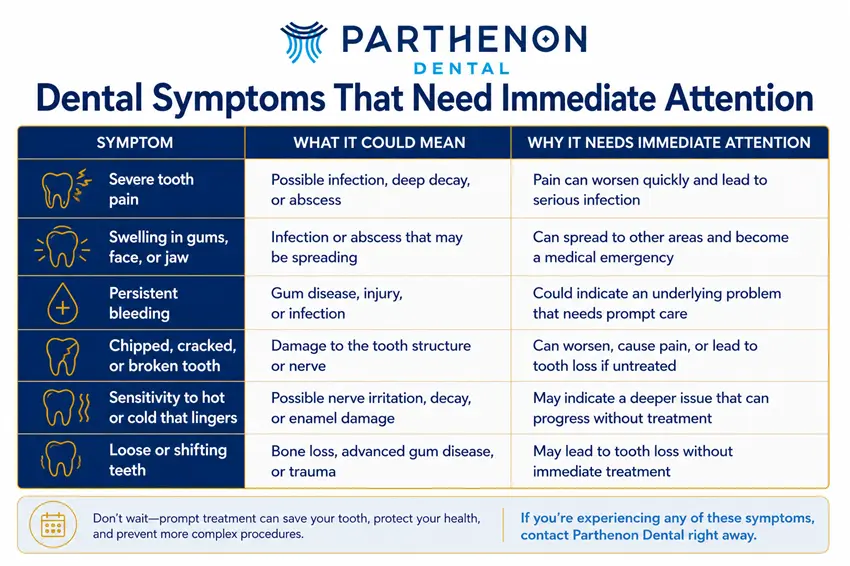
Pain, significant sensitivity, bleeding that does not stop, a loose tooth, or a fracture that appears to extend deeply into the tooth are reasons to seek prompt dental attention. However, a painless chip or crack should still be evaluated. Some fractures extend farther than you can see or produce symptoms later.
If you’re trying to understand the different types of fractures and why their severity can vary, our guide to how serious tooth cracks can be explains what can happen when a crack involves deeper layers of the tooth.
What to Do If a Filling Breaks or Falls Out
A lost or broken filling may leave part of the tooth exposed, which can cause sensitivity to temperature, pressure, or certain foods. Even if the tooth does not hurt, contact your dentist so they can determine how soon it should be evaluated.
Until you can be seen:
- Avoid chewing on the affected side of your mouth.
- Stay away from very hot, cold, hard, or sticky foods if they trigger sensitivity.
- Brush the area gently to keep food and plaque from accumulating around the damaged tooth.
- Do not attempt to permanently fill or repair the tooth yourself.
Temporary dental repair products are available over the counter, but they are not a replacement for a professional restoration. If you are considering using one before your appointment, ask your dental office whether it is appropriate for your situation.
Your dentist will need to examine the tooth to determine whether another dental filling is appropriate or whether the remaining tooth structure needs a different type of restoration.
What to Do If a Crown Breaks or Comes Off
If a dental crown comes loose or falls off, contact your dentist even if the tooth underneath does not hurt. The crown was placed to protect and restore a tooth that needed additional support, and the underlying tooth should be examined before the crown is reattached or replaced.
While you are arranging care:
- Save the crown if you still have it and bring it to your appointment.
- Avoid chewing on the affected tooth.
- Keep the area clean with gentle brushing.
- Avoid foods or drinks that cause sensitivity.
- Do not use super glue or another household adhesive to put the crown back in place.
An intact crown can sometimes be recemented, but that decision needs to be made after the dentist examines the crown and the tooth underneath it. If the crown is damaged or the tooth needs a new restoration, replacement may be necessary.
Parthenon Dental offers same-day dental crowns using in-office CEREC technology. When a new crown is appropriate, eligible patients can have the restoration designed, created, and placed during one appointment.
Increasing pain, significant sensitivity, swelling, or additional breakage of the tooth are reasons to tell the dental office that your symptoms have changed rather than simply waiting for a previously scheduled appointment.
What to Do If Something Is Stuck Between Your Teeth
Food or another small object caught tightly between two teeth can cause surprising pain and pressure. If you can see or feel something stuck, you can try gently removing it with dental floss while you arrange care if needed.
Work the floss carefully between the teeth rather than snapping it forcefully into the gums. Do not use pins, needles, knives, or other sharp objects to dig around the tooth or gum, since this can injure the surrounding tissue.
If gentle flossing does not remove the object, stop trying and contact your dentist. Persistent pain or swelling may also mean there is more going on than trapped food, particularly when you cannot actually see what is causing the discomfort.
The goal at home is simply to remove something that comes out easily without damaging the teeth or gums. If it does not, let your dentist take it from there.
Managing a Toothache Until You Can See a Dentist
A toothache is a symptom, not a diagnosis. Decay, a crack, an infection, damaged dental work, and other problems can all cause dental pain, so feeling temporarily better does not tell you whether the underlying problem has resolved.
Contact your dentist to discuss new, persistent, or significant tooth pain. While you are waiting to be seen, a few measures may help you stay more comfortable:
- Rinse gently with warm water to help clear debris from the mouth.
- Floss carefully if you think food may be caught between the teeth.
- Apply a cold compress to the outside of your cheek if swelling is present.
- If you normally can take over-the-counter pain medication safely, follow the product label or your healthcare provider’s instructions.
Never place aspirin or another pain medication directly against the painful tooth or gum. Doing so does not treat the source of the toothache and can damage the surrounding soft tissue.
Pay attention to what happens next, too. Tooth pain that fades and returns—or disappears without treatment—does not necessarily mean the problem has healed. Our guide to tooth pain that comes and goes explains why intermittent pain is still worth discussing with your dentist.
If a toothache is accompanied by facial swelling, fever, drainage, difficulty swallowing, or rapidly worsening symptoms, contact a dentist promptly and explain those symptoms rather than relying on home pain relief alone.
When a Dental Emergency Requires Immediate Care
Home first aid can help protect an injured tooth or make you more comfortable while you arrange care, but some symptoms should move the situation out of the “wait for an appointment” category.
Contact a dentist promptly if you are dealing with:
- A knocked-out, loose, cracked, or significantly broken tooth
- Severe or worsening tooth pain
- Facial or gum swelling
- Signs of infection, including fever, pus, or a persistent bad taste
- Bleeding that does not stop with gentle pressure
- A lost or broken restoration accompanied by significant pain or sensitivity
Some symptoms require emergency medical attention rather than waiting to reach a dental office. Difficulty breathing or swallowing, rapidly spreading facial or neck swelling, major facial trauma, or other potentially life-threatening symptoms warrant immediate medical care.
If your symptoms fall somewhere in between, don’t make the decision based only on how much the tooth hurts. Call your dentist, explain what happened, and let the dental team help determine how quickly you should be seen.
For more help distinguishing an urgent problem from one that may be able to wait for a scheduled visit, read our guide to when a dental problem can’t wait.
What to Keep in a Dental First-Aid Kit
You do not need a cabinet full of dental products to be better prepared for an unexpected injury. A few basic supplies can make it easier to protect the mouth and follow your dentist’s instructions while you are on the way to professional care.
Consider keeping these items somewhere easy to reach:
- Clean gauze for applying pressure to bleeding
- A cold pack for swelling after an injury
- Dental floss for gently removing food or debris between teeth
- A small, clean container for a knocked-out tooth or broken piece of tooth
- A tooth-preservation product designed for knocked-out teeth, if you choose to keep one on hand
- Your dentist’s phone number saved in your phone
If someone in your household plays contact sports or spends significant time away from home, a smaller version can also be useful in a sports bag or travel first-aid kit.
The purpose of these supplies is not to treat the dental emergency yourself. They simply give you what you may need to protect the tooth, control bleeding or swelling, and avoid further injury while you contact a dentist and arrange appropriate care.
First Aid Is the First Step, Not the Treatment
Knowing what to do after a dental injury can help you protect a tooth, control bleeding or swelling, and avoid making the problem worse while you arrange professional care. What those steps cannot do is tell you the full extent of the damage or treat the underlying problem.
A tooth that stops hurting may still be damaged. A small chip can extend deeper than it appears. A knocked-out tooth still needs immediate professional treatment even when it has been handled correctly. When something unexpected happens, use first aid to protect the area and then contact your dentist for guidance on what comes next.
Parthenon Dental provides emergency dental care for patients in San Ramon who are dealing with sudden pain, dental injuries, broken restorations, swelling, and other urgent concerns. If you are unsure how serious the problem is, call our office and tell us what happened. We can help you determine the appropriate next step and arrange care as quickly as possible.