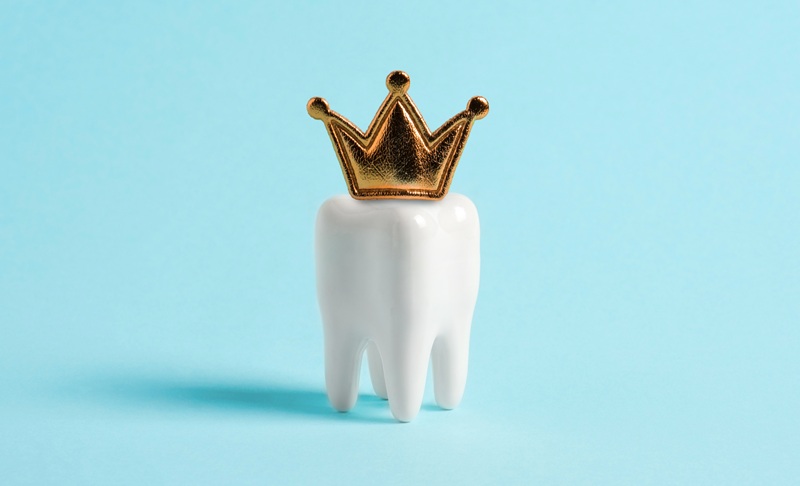
Getting a dental crown traditionally requires two appointments. Your dentist prepares the tooth and captures an impression or scan during the first visit. A dental laboratory then creates the permanent crown while you wear a temporary restoration. You return later to have the final crown placed.
Modern technology in digital dentistry has changed that workflow. With same-day crowns, digital scanning, computer-aided design, and in-office milling can bring several stages into one appointment. Parthenon Dental uses CEREC technology to design and create qualifying ceramic crowns in the San Ramon office.
The modern technology changes how a crown is made and delivered. It does not change the need to determine which restoration is appropriate for your tooth.
How Digital Technology Changes the Traditional Crown Process
The biggest change is where and when the permanent restoration is created.
Traditional crown treatment usually requires sending the restoration information to a dental laboratory. The laboratory creates the permanent crown, which returns to the dental office for placement at a later appointment. A temporary crown protects the prepared tooth in the meantime.
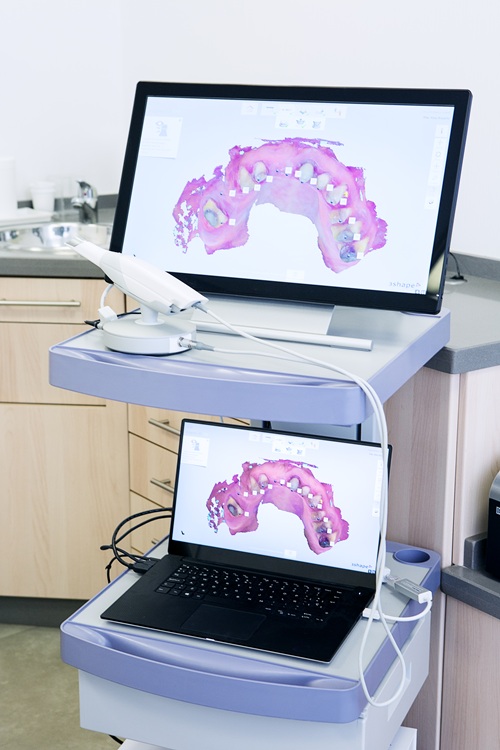
A digital CAD/CAM workflow can move that fabrication process into the dental office. CAD/CAM stands for computer-aided design and computer-aided manufacturing. Digital information about your mouth is used to design the restoration before specialized equipment mills the physical crown.
Connecting these modern technologies can allow the permanent crown to be placed during the same appointment rather than after a laboratory waiting period.
How CEREC Technology Creates a Crown in One Visit
Digital technology changes how several stages of crown treatment are completed. The tooth still requires proper preparation, and the finished restoration must fit your tooth and bite.
The difference is that scanning, design, and fabrication can now be connected within the dental office.
1. The Tooth Is Prepared for the Restoration
Before the digital process begins, your dentist evaluates and prepares the tooth for a crown. Damaged or decayed material may need to be removed, and the remaining tooth is shaped to support the restoration.
Not every damaged tooth requires a crown. In some cases, a smaller area of damage may be treated with a dental filling or another restorative option.
2. A Digital Scanner Captures the Tooth and Bite
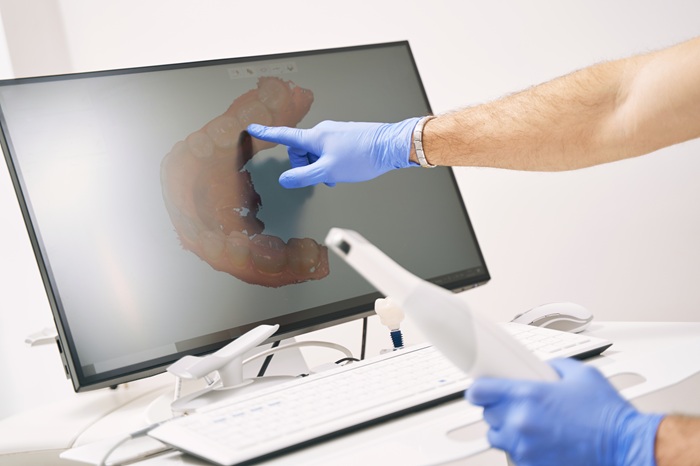
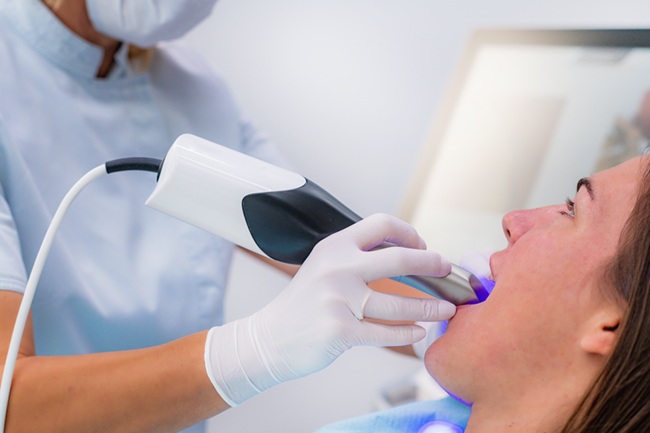
An intraoral scanner captures the prepared tooth and surrounding structures to create a three-dimensional digital representation.
The scan also captures information about neighboring and opposing teeth. This helps the dentist design a crown that works within your existing bite.
Rather than simply replacing traditional impression material, the scan becomes the starting point for the digital design and manufacturing process.
3. The Crown Is Designed Digitally
Specialized software uses the scan to create the crown’s digital design. The dentist can evaluate its shape, contact with neighboring teeth, and relationship to your bite before fabrication begins.
This is the “CAD,” or computer-aided design, portion of CAD/CAM. Software assists with the process, but the dentist still evaluates and adjusts the proposed restoration.
4. The Digital Design Becomes a Physical Crown
Once the design is complete, the information is sent to the CEREC milling equipment. The crown is milled from a ceramic block in the dental office.
This is the “CAM,” or computer-aided manufacturing, stage. Chairside milling connects the digital design directly to fabrication without sending the restoration to an outside laboratory.
5. The Finished Crown Is Evaluated and Placed
The crown is not automatically placed once milling is complete. Your dentist checks its fit and bite and makes adjustments when necessary. The restoration can then be polished and permanently bonded or cemented.
For appropriate cases, this connected workflow allows scanning, design, fabrication, evaluation, and final placement to occur during one appointment.
Why Does Eliminating the Temporary Crown Change the Experience?
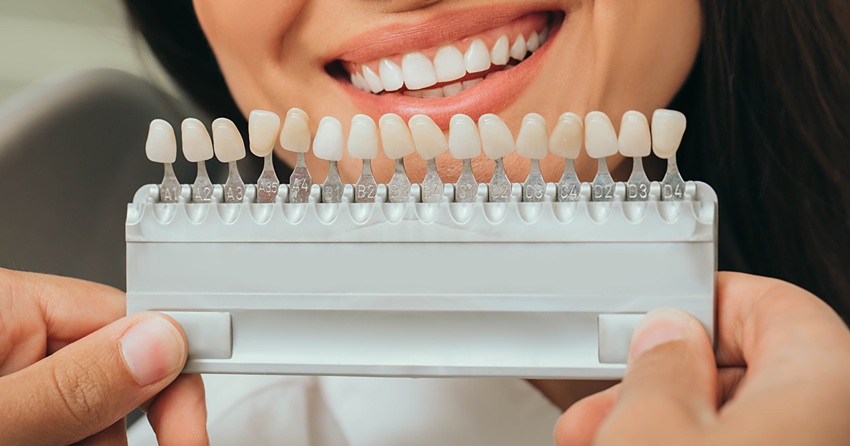
Temporary crowns protect a prepared tooth while a dental laboratory creates the permanent restoration. They serve an important purpose, but they also add another stage to the process.
Patients need to care for the temporary crown until the permanent restoration is ready. They then return for another appointment to have the temporary removed and the final crown evaluated and placed.
When CEREC technology allows the permanent crown to be designed and fabricated in the office, a temporary may not be necessary. The benefit is not that temporary crowns are problematic. Instead, the digital workflow can eliminate an intermediate restoration and return visit in appropriate cases.
Are Digital Crowns Less Precise Than Traditional Crowns?
Not necessarily. Digital technology alone does not determine how well a crown fits.
Crown precision depends on the entire restorative process, including tooth preparation, scanning, design, material selection, fabrication, and final adjustments. Research comparing digital and conventional workflows also shows that results depend on multiple parts of that process.
This is an important distinction with CEREC technology. The scanner, design software, and milling equipment provide digital tools for creating the restoration, but they do not replace clinical judgment.
The dentist still evaluates the design, checks the finished crown against your tooth and bite, and makes adjustments before placement.
When Can This Digital Crown Workflow Be Used?
CEREC technology can make it possible to complete a crown in one appointment, but the digital workflow is not appropriate for every situation.
Your dentist still needs to evaluate the remaining tooth structure, location of the damage, your bite, restorative material, and any additional treatment the tooth requires. For example, the depth and location of a fracture can affect the restorative approach. Understanding how serious tooth cracks can be can provide useful context if you are dealing with a damaged tooth.
The same applies when an existing restoration fails. A broken crown or filling needs to be evaluated before determining which restoration or workflow is appropriate.
Digital technology can streamline treatment when the clinical circumstances support it. It does not replace the evaluation that determines what the tooth actually needs.
How Does Same-Day Crown Technology Fit Into Digital Dentistry?

CEREC crowns are one example of how multiple digital technologies can work together during dental treatment.
In this workflow, an intraoral scan creates digital information about the mouth. Software uses that information to design the restoration, and milling equipment turns the completed design into a physical crown.
A scanner alone does not create a same-day crown. Neither does design software or a milling machine. Connecting these technologies into one workflow is what makes chairside fabrication possible.
This is similar to other forms of computer-assisted manufacturing, but dentistry adds an important clinical requirement. The finished restoration must not only match a digital design. It must fit the tooth, function within the patient’s bite, and be evaluated before placement.
Does Same-Day Mean the Appointment Is Short?
Not necessarily. “Same-day” means the crown can be completed during one appointment in appropriate cases. It does not mean the entire process takes only a few minutes.
The tooth still needs to be evaluated and prepared. The dentist then captures the digital scan, designs and mills the restoration, and checks the finished crown before placement.
That can make the appointment longer than either individual visit in a traditional two-appointment process. However, completing these stages together may eliminate the laboratory waiting period, temporary crown, and return visit.
The technology changes the number and sequence of appointments rather than simply making every step faster.
Modern Technology Changes the Workflow, Not the Reason for Treatment
The value of same-day crown technology is not simply speed. Digital scanning, computer-aided design, and in-office milling connect stages that traditionally occur across different locations and appointments.
Clinical decisions still come first. Your dentist must determine what is causing the tooth damage, whether a crown is appropriate, and whether a chairside ceramic restoration fits your needs. Digital technology can then streamline how that treatment is completed without eliminating the clinical evaluation behind it.
Parthenon Dental uses CEREC technology for appropriate dental crown cases in San Ramon. If your tooth needs restoration, the dental team can determine whether a same-day digital workflow or another restorative approach makes sense.
Need a Same-Day Crown?
Parthenon Dental has you covered. Reach out today.