
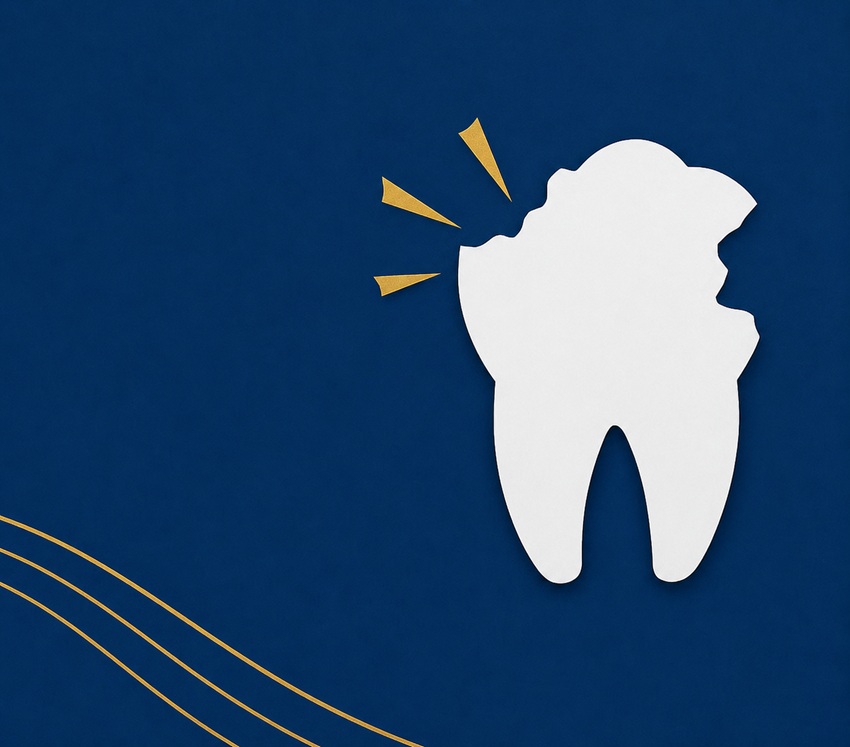
A small cavity that is not causing pain is easy to put off. The tooth feels fine. Life is busy. The dentist mentioned it at the last cleaning and said it was something to watch. The logic of waiting makes sense until you understand that a cavity is not a stable situation. It is an active process. The decay that creates a cavity does not pause while you decide what to do about it. The earlier a cavity is treated, the simpler and less involved the treatment is. This post walks through what actually happens to a cavity over time and what that means for treatment.
The Journey of an Untreated Cavity
Understanding how tooth decay progresses helps make the case for early treatment in a way that a general recommendation to “get it taken care of” does not. Each stage of cavity development involves a different layer of the tooth and corresponds to a different level of treatment complexity.
Stage One: Enamel Decay
The earliest stage of a cavity begins in the enamel, the outermost layer of the tooth. At this point, bacteria in the mouth are producing acid that is demineralizing the enamel surface. The tooth is not yet physically breached, and in some cases, very early enamel lesions can be arrested or even remineralized with fluoride and improved oral hygiene before a physical cavity forms.
Once the decay has progressed to an actual cavity in the enamel, it requires a filling. Treatment at this stage is straightforward: remove the decayed tissue, clean the area, and place the filling material. The appointment is typically short, the amount of tooth structure removed is small, and the restoration is conservative.

Stage Two: Dentin Involvement
Dentin sits just beneath the enamel. It is softer and less mineralized, which means decay moves through it more quickly. Dentin also contains microscopic tubules that lead to the nerve, which is why teeth become sensitive when decay reaches this layer. A patient who has been waiting out a painless cavity may start to notice temperature sensitivity or mild discomfort when the decay reaches dentin.
A cavity in dentin still requires a filling, but the preparation is larger. More tooth structure must be removed to clean out all the decay. In some cases, a deeper dentin cavity requires additional steps to protect the pulp from the filling material. The restoration is still a filling at this stage, but the tooth has lost more of its original structure.
Stage Three: Pulp Involvement
The pulp is the innermost part of the tooth, containing the nerve and blood supply. When decay reaches the pulp, the situation changes significantly. The bacteria are now in contact with live tissue, which triggers an inflammatory response. This is often when patients experience a significant toothache that sends them to the dentist urgently.
At this stage, a filling is no longer sufficient. The pulp tissue is infected or inflamed, and root canal treatment is needed to remove it, clean the canals, and seal the tooth before a crown is placed. This is a much more involved process than the filling that would have been needed earlier. The tooth is saved, but it has been through considerably more intervention.
Stage Four: Abscess and Bone Involvement

If an infected pulp is not treated, the infection can spread beyond the tooth into the surrounding bone. An abscess forms, the bone around the root may begin to be affected, and the situation becomes a dental emergency. Patients at this stage often experience significant pain, swelling, and sometimes facial inflammation.
Treatment at this point still typically involves root canal therapy if the tooth can be saved, but the infection must first be controlled, often with antibiotics, before definitive treatment can proceed. In some cases, the extent of bone loss means the tooth cannot be saved, and extraction is the only option.
Stage Five: Extraction and Replacement
When untreated decay progresses far enough, the tooth may not be restorable. Extraction removes the infection and the source of ongoing bone loss, but it introduces a new set of considerations: the space left behind, the effect on neighboring teeth, and the options for replacing the missing tooth, whether with a dental implant, bridge, or other restoration.
The cost and complexity at this stage far exceed what early treatment would have involved. An implant to replace a lost tooth is a multi-step process that takes months. The comparison to a 30-minute filling appointment is not subtle.
Why Cavities Do Not Hurt Early On
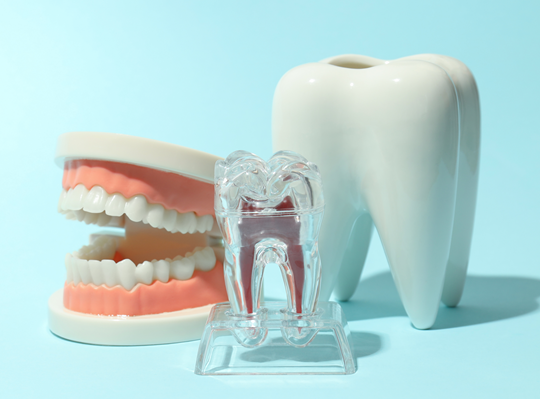
One of the most consistent reasons patients delay cavity treatment is the absence of pain. This makes intuitive sense: if the tooth feels fine, why treat it? The answer is in the anatomy of the tooth. Enamel has no nerve supply. Decay confined to enamel produces no sensation at all. The tooth is being damaged without sending any signal about it.
By the time a cavity produces symptoms, it has almost always progressed beyond the enamel. The sensitivity and pain that motivate people to seek care are signs that the decay has already reached a deeper layer. Waiting for pain is, in effect, waiting for the problem to grow.
This is one of the reasons regular dental exams matter as much as they do. X-rays and visual examination can identify cavities while they are still in the enamel or early dentin, before any symptoms appear — earlier than the patient would know anything was wrong.
How Long Can a Cavity Go Untreated?
The honest answer is that it depends on the individual, the location of the cavity, and factors like diet and saliva composition that affect how fast decay progresses. Some cavities move slowly over months or years. Others move faster.
According to the Centers for Disease Control and Prevention, more than 90% of adults in the United States have had a cavity at some point, and about a quarter have untreated decay. [1] The gap between having a cavity and treating it is one of the most common patterns in dental care.
What the research consistently shows is that untreated decay does progress. It does not stabilize on its own. The rate varies, but the direction does not. A cavity caught and filled when it is small requires a small filling. The same cavity found later may require a larger filling, a crown, or root canal treatment, depending on how far the decay has traveled.
Signs a Cavity May Be Getting Larger
- New or increasing sensitivity to sweet, cold, or hot foods and drinks
- A toothache or dull aching that was not there before
- A visible dark spot or hole that was not previously there
- Food getting stuck in a tooth in a new way
- Pain when biting down on a specific tooth
What Early Cavity Treatment Actually Involves

A small cavity is one of the most routine procedures in dentistry. The appointment is typically 30 to 45 minutes. The area is numbed, the decayed tissue is removed, and tooth-colored filling material is placed and shaped to match the tooth’s contours. The tooth is restored to full function, and the process creating the cavity is stopped.
For patients who are anxious about dental treatment, a small cavity is also the most straightforward context in which to experience it. The procedure is minimally invasive, recovery involves nothing more than avoiding very hot or cold food for a short time, and the result is a tooth that is protected going forward.
A filling at the early stage preserves the maximum amount of healthy tooth structure. Every stage of delay costs more of that structure and requires a more involved restoration to compensate. The filling that replaces lost enamel is the most conservative option available. Everything after it involves more.
The Case for Not Waiting
The patients who tend to deal with the most involved treatment are those who have been away from dental care for a while and come in once something starts to hurt. That pattern makes complete sense given how cavities work — pain is a late signal. By the time it shows up, the decay has already been working for a while. The teeth that feel fine are exactly where prevention and early detection have the most to offer.
A lot of people have mixed feelings about dental visits, or have let more time pass between appointments than they intended. That is a normal situation. But the practical reality of how cavities progress means that a visit when nothing seems wrong is often the most useful visit of all. Finding a small cavity before it becomes a large one changes the entire treatment path.
If a dentist has flagged something to watch, or if a tooth has started to feel different from the way it used to, that is worth acting on sooner rather than later. The five-stage progression above is not a worst-case scenario, it is just what happens when decay is left alone long enough.