
Cosmetic bonding and dental crowns are both used to improve damaged or imperfect teeth, but they solve very different problems. Patients sometimes assume crowns are automatically the “stronger” or more complete option, while others want bonding for every situation because it feels less invasive. The reality is that the right choice depends on what the tooth actually needs.
A small cosmetic issue on a healthy tooth calls for a different approach than a tooth that is cracked, heavily filled, or struggling to hold up under daily bite pressure. Understanding where bonding performs well, and where a crown offers better long-term protection can help you make a more confident decision about your treatment.
What Each Option Actually Involves
Before comparing them, it helps to understand what each treatment does to the tooth.
Dental bonding
Bonding applies a tooth-colored resin directly to the surface. No drilling, no removal of healthy structure. The dentist shapes the material, hardens it with a curing light, and polishes it to blend with the surrounding tooth. Most visits take 30 to 60 minutes per tooth and require no anesthesia in the majority of cases. It is well-suited for chipping, minor staining, and small gaps that affect the smile without compromising the underlying tooth.
Dental crowns
A crown covers the entire visible portion of the tooth. To place one, the dentist removes a layer of tooth structure around the perimeter so the crown fits over it. That reduction is permanent. The crown is then fabricated and cemented into place, typically across two appointments, though same-day crowns made with in-office milling technology can eliminate the second visit entirely.
The Core Trade-Off
Bonding adds material without taking any away. Crowns require removing tooth structure that will never grow back. That trade-off sits at the center of most bonding vs. crown decisions, particularly for teeth that are otherwise healthy. The more intact the tooth, the stronger the case for the more conservative option.
When Bonding Is the Right Call
Bonding tends to be the stronger choice in these situations:
- A chip or small crack that affects the smile but not structural integrity
- Minor reshaping, such as adjusting the size or rounding a sharp edge
- Covering staining or discoloration that whitening has not resolved
- Closing small spaces between front teeth
- A tooth that is otherwise healthy with no significant decay or large existing restorations
Bonding is also the more reversible path. Because it does not require reducing the tooth, it leaves future options open. The bonding can be repaired or replaced if needed, and if you later decide to pursue veneers or a crown, none of those paths are closed off. That flexibility matters long-term, particularly for younger patients or anyone whose dental situation may change over time.
Longevity and cost
Bonding generally costs less than a crown, often significantly, and is completed in a single visit at a fraction of the investment. According to the Journal of Esthetic and Restorative Dentistry, direct composite bonding has a clinical success rate of approximately 90% at five years when properly placed and maintained. For straightforward cosmetic concerns on healthy teeth, that is a legitimate and durable path.
When a Crown Makes More Sense
A crown is the better answer when the tooth needs structural support, not just surface improvement. The following situations typically call for a crown rather than bonding.
Large existing filling
When a tooth already has a large restoration, bonding does not have enough sound surface area to adhere reliably. A crown distributes bite force across the whole tooth and provides more stable, long-term coverage than composite resin can offer on a heavily restored surface.
Tooth after a root canal
Root canal-treated teeth become more brittle over time because they no longer have a living pulp supplying moisture to the surrounding structure. A crown protects them from fracture under normal chewing in a way that bonding alone cannot.
Severely cracked or broken tooth
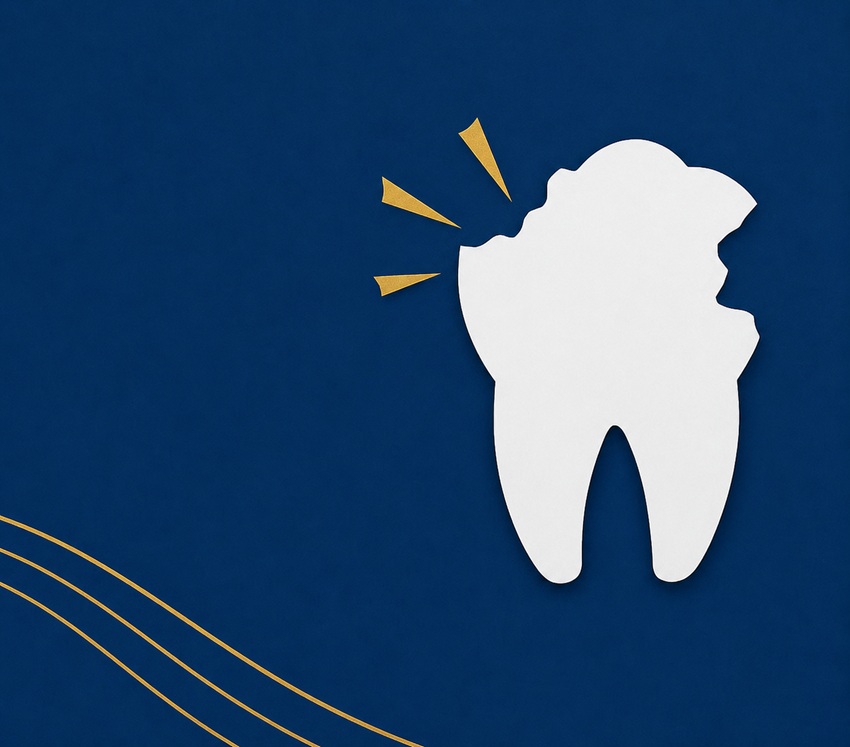
Bonding can address surface chips, but it cannot stabilize a structural crack that runs through the tooth. A crown holds the tooth together and prevents the crack from propagating further under chewing stress. Leaving a structural crack unaddressed, or covering it with bonding alone, can lead to a more serious fracture down the line.
Heavy bite forces on a back tooth
Composite resin is not as durable as porcelain or ceramic under sustained chewing pressure. Crowns on molars can last 15 to 20 years or more with proper care, while bonding on high-stress back teeth may chip or wear more quickly. For teeth bearing a significant bite load, a crown often turns out to be the more cost-effective call over a longer horizon.
Significant decay with little healthy structure remaining
When decay has left a minimal natural tooth, there is not enough sound surface for bonding to adhere to. A crown restores full function and protects what remains from further breakdown, which bonding cannot reliably do when the structural foundation is already compromised.
The Factors That Actually Decide It
When someone is genuinely weighing both paths, the conversation usually comes down to four things.
How much healthy tooth structure remains
The more intact the tooth, the stronger the case for bonding. The more compromised through decay, fracture, or a history of large restorations, the stronger the case for a crown. A tooth that has already lost significant structure is not a good bonding candidate, because composite resin needs a solid surface to bond to and cannot substitute for missing tooth architecture.

Where the tooth sits in the mouth
Front teeth face less bite pressure and are generally better candidates for bonding. Back teeth take the brunt of chewing and often warrant a crown. A chipped upper lateral incisor is a very different situation from a cracked lower molar, even if both involve surface damage that looks similar at first glance.
What is the goal
Purely cosmetic improvements on a structurally sound tooth lean toward bonding. Functional restoration or protection of a weakened tooth leans toward a crown. When both goals are present, the tooth needs protection and cosmetic improvement; a crown often addresses both at once, which can make the larger upfront investment more justifiable.
Budget and long-term outlook
Bonding costs less upfront and is completed in a single visit. A crown is a larger investment in time and money, but it tends to hold up longer under sustained bite pressure. For a healthy front tooth with a minor cosmetic concern, bonding is almost always the more sensible financial choice. For a compromised back tooth, the calculus often reverses. Neither factor works in isolation; the combination of all four considerations matters more than any single one.
How to Get the Most Out of Bonding
If bonding is the right call for your tooth, a few habits make a meaningful difference in how long it lasts. Composite resin is durable, but it is not indestructible. Biting fingernails, chewing ice, or using teeth to open packaging puts stress on bonded restorations in the same way it stresses natural teeth, and bonded material is more susceptible to chipping at the edges than enamel is.
Bonding is also more prone to staining than porcelain, which is worth knowing if you drink coffee, tea, or red wine regularly. The resin will not stain as dramatically or as quickly as teeth without a protective coating, but it will pick up color over time. Avoiding heavily pigmented food and drinks in the first 48 hours after bonding is placed, when the material is most permeable, helps preserve the shade match. Routine dental cleanings keep both the bonded surface and the surrounding teeth looking consistent.
Bonding that chips or wears can generally be repaired at a single visit without replacing the entire restoration, which is one of its practical advantages over more involved options.
How Bonding Compares to Veneers
If you are researching bonding vs. crowns, you are likely also thinking about veneers. Porcelain veneers sit between the two in terms of coverage and commitment. They cover the front surface of the tooth rather than encasing the whole tooth like a crown, but they do require removing a thin layer of enamel, unlike bonding. For patients who want a longer-lasting result with better stain resistance on healthy teeth that do not need structural support, veneers can be a strong middle ground. The full comparison of bonding vs. veneers covers that decision in more detail.
Getting to the Right Answer for Your Tooth
Most people researching this already have a specific tooth in mind. General information only goes so far; whether bonding or a crown is right depends on what is actually happening with that tooth, and that requires a direct examination. If you want a recommendation grounded in what a dentist can see rather than what sounds good on paper, a consultation is the most useful next step.